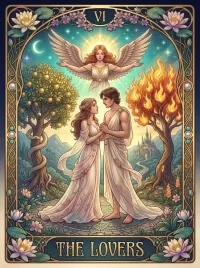
 The Lovers
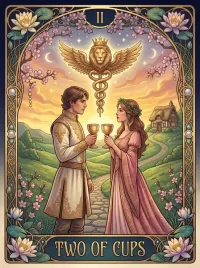 Two of Cups
The Lovers + Two of Cups
A Major setting the theme (choice, values) and a Minor showing how it is playing out day to day (mutual feeling). Classic noun-plus-verb structure.
Read this combinationGuide
Read a combination as one sentence, not two definitions. The first card sets the subject, the second modifies it, and the meaning lives in the pressure between them. Two cards read together carry far more information than the same two cards read separately.
Give the first card the role of noun and the second the role of verb or adjective. "The Magician, then Ace of Wands" becomes capability igniting an opportunity. "Ace of Wands, then The Magician" becomes a spark that now needs skill applied to it.
Say the sentence out loud. If it does not describe something recognisable in your life, you have read the cards as two separate definitions rather than as one statement.
Yes, in positional spreads — past/present/future or situation/obstacle/advice — because each position already assigns a role. In a free two-card pull the order matters less, and the more useful question becomes which card is the louder one.
A Major Arcana card almost always dominates a Minor. When two Majors appear together, the reading is structural: something large is being decided, not merely managed.
Repeated suits tell you which domain the reading lives in: two Pentacles means the answer is material, two Cups means it is emotional. Repeated numbers point at a stage — two Fives is instability, two Tens is completion arriving.
Opposed elements — Water beside Fire, Air beside Earth — usually describe friction between how someone feels and how they are acting.
Inside The Codex
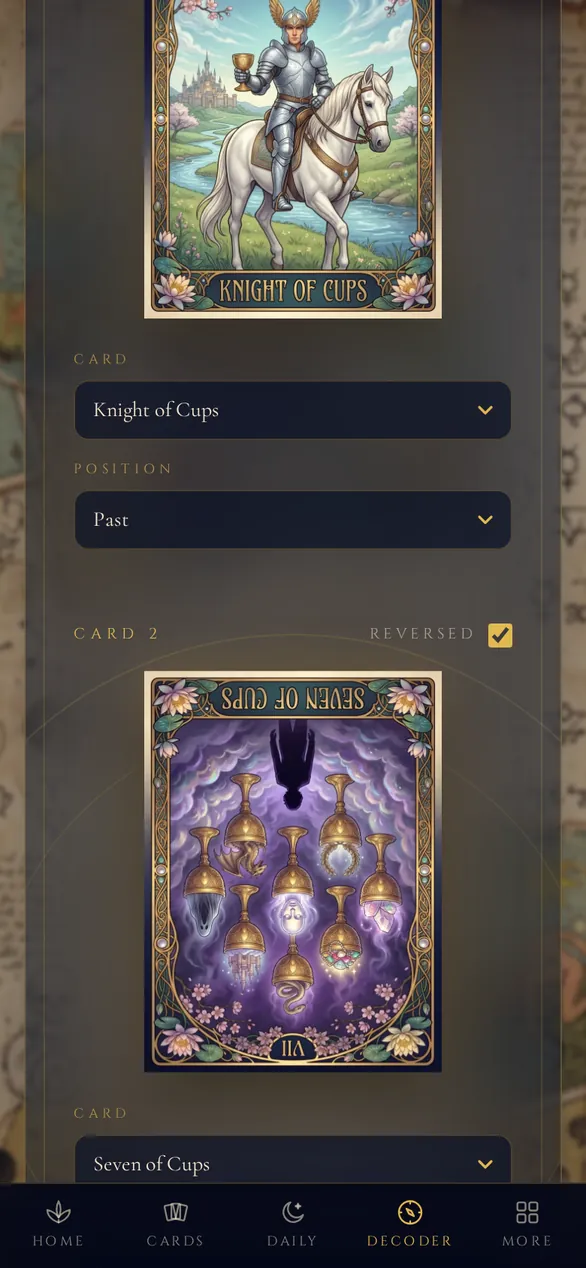
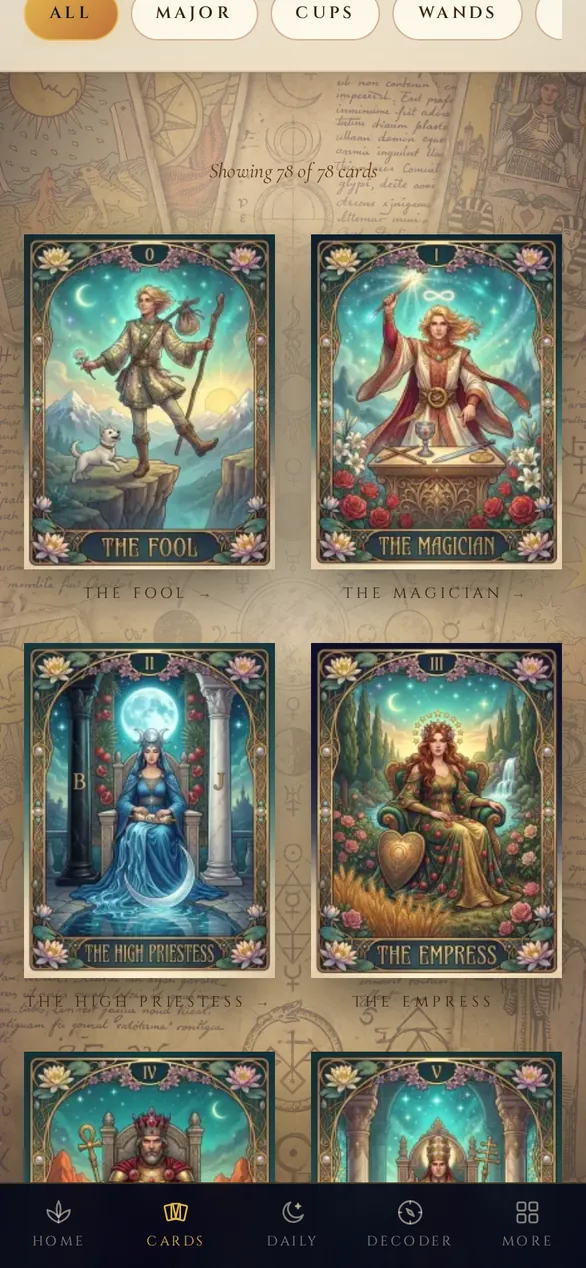
Real screens from the app — card library, decoder and daily draw.
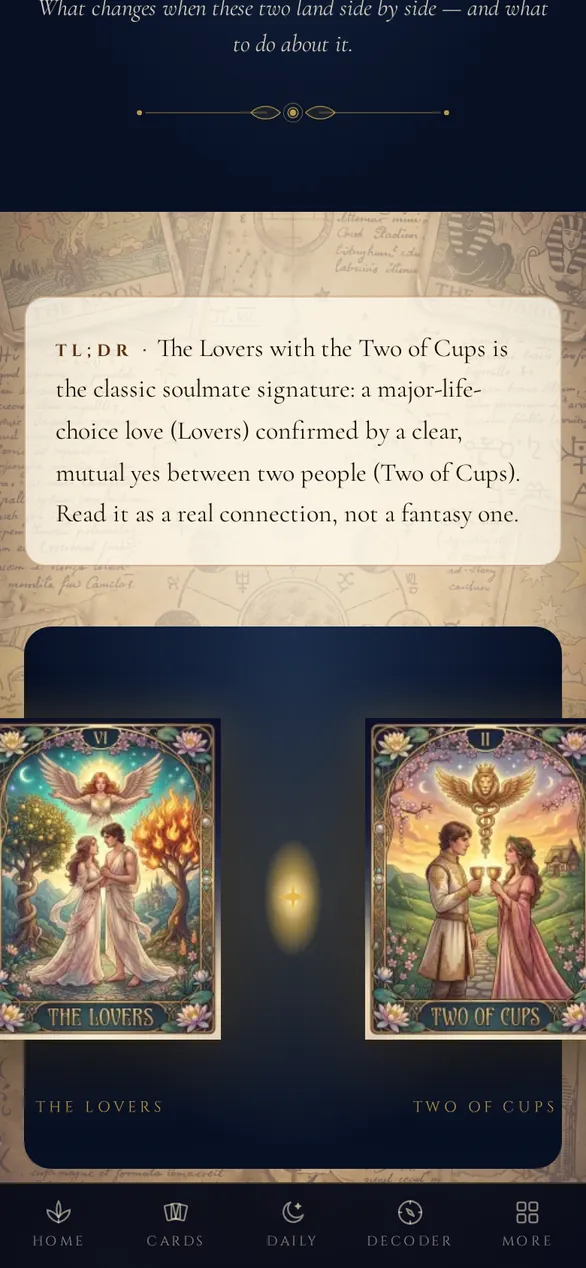
 The LoversTwo of Cups
A Major setting the theme (choice, values) and a Minor showing how it is playing out day to day (mutual feeling). Classic noun-plus-verb structure.
Read this combination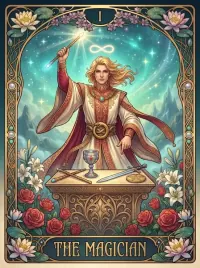 The Magician
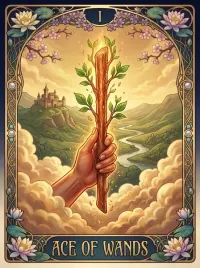 Ace of Wands
Two beginnings stacked. When two openings appear together, the reading is about capacity to act, not about whether the opportunity is real.
Read this combination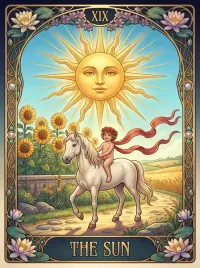 The Sun
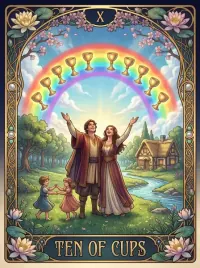 Ten of Cups
Two agreeing cards. Agreement is information too: it means nothing in the situation is currently pulling against you, which is rarer than it sounds.
Read this combination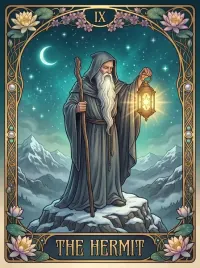 The Hermit
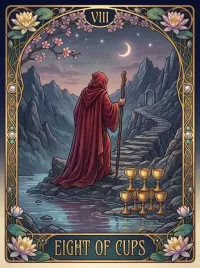 Eight of Cups
Both cards point away from the current situation. When a pair agrees in direction, read the second card as timing rather than as a separate message.
Read this combination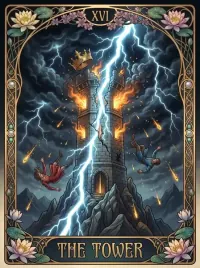 The Tower
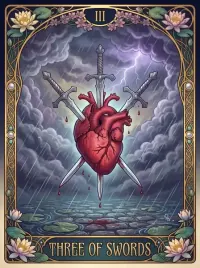 Three of Swords
Cause and consequence in one pair. The Major supplies the event, the Minor supplies the felt result — one of the clearest structures in combination reading.
Read this combinationEnter any two or three cards and read what they say as a single statement.
Open the Decoder