Guide

Tarot for Shadow Work

Shadow work with tarot means using the difficult cards as description rather than warning. The Devil, The Moon, The Tower, Death and the heavier Swords name the parts of a situation you are managing rather than facing — and a card that names something accurately is easier to work with than a fear that stays vague.

What shadow work means in a reading

Shadow is not evil. It is the material you have disowned — the resentment you call patience, the dependency you call loyalty, the avoidance you call timing. Tarot is useful here because the imagery gives that material a name without requiring you to defend yourself.

The rule that keeps this healthy: read the card as a description of a pattern, never as a description of your worth.

The five cards that carry most shadow material

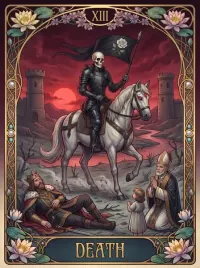
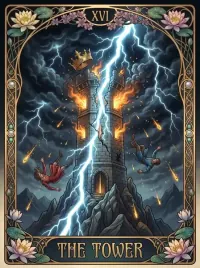
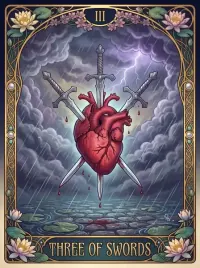
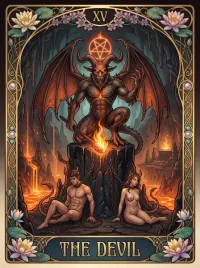
The Devil is the chain you are holding from the inside — compulsion, bargaining, a bond kept in place by fear. The Moon is what you know but have not admitted. Death is the ending you keep postponing. The Tower is the structure that collapses because it was already hollow. Three of Swords is the truth that hurt and had to be told.

None of these are punishments. Each names something already happening.

  • The Devil — what am I choosing that I call being trapped?
  • The Moon — what do I already know and refuse to say?
  • Death — what has ended that I am still maintaining?

How to close a heavy reading

Always end with one card for the next honest action, and keep the action small enough to complete this week. Shadow work fails when it produces insight with no exit — the insight becomes another thing to ruminate on.

If a reading destabilises you rather than clarifying anything, stop. Tarot is a reflective practice, not a substitute for therapy or medical care.

Five shadow pairings, read properly

The DevilThe Devil
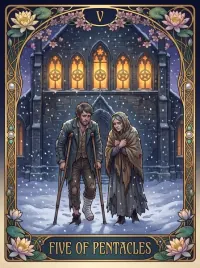
Five of PentaclesFive of Pentacles

The Devil + Five of Pentacles — the fear underneath the bond

Scarcity is doing the deciding. Name the specific fear — money, housing, being alone — and the situation stops being a moral failure and becomes a solvable problem.

Read this combination
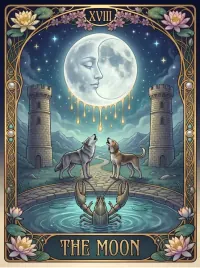
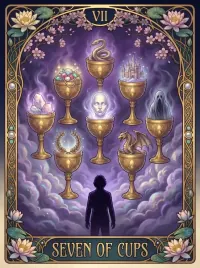
The MoonThe Moon
Seven of CupsSeven of Cups

The Moon + Seven of Cups — self-deception with options

The story you tell yourself has more detail than the facts do. Write down only what you can verify; the shadow lives in the gap.

Read this combination
DeathDeath
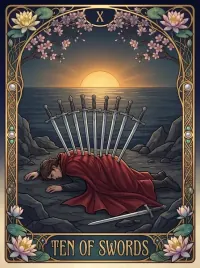
Ten of SwordsTen of Swords

Death + Ten of Swords — the ending you keep re-staging

The most final pair in the deck. Its shadow reading is repetition: returning to the same ending because closing it properly would require grief.

Read this combination
The TowerThe Tower
Three of SwordsThree of Swords

The Tower + Three of Swords — the collapse that told the truth

Painful, and usually accurate. Shadow work here is resisting the urge to rebuild the same structure quickly to stop feeling the loss.

Read this combination
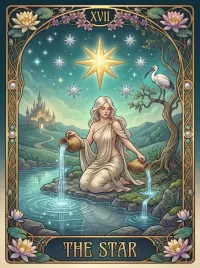
The StarThe Star
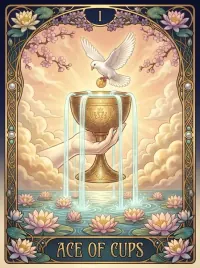
Ace of CupsAce of Cups

The Star + Ace of Cups — the repair card

Where a shadow reading should end. Not resolution, but the first return of feeling after honesty. Close difficult sessions by drawing toward this kind of card.

Read this combination

Common questions about shadow work

Are there bad cards in tarot?
No card is a punishment. The heavy cards describe pressure that already exists; naming it accurately is what makes it workable. A reading that frightens you has been read as prophecy rather than description.
How often should I do shadow readings?
Sparingly — once a fortnight is plenty, and always with a concrete next action. Frequent heavy readings tend to become rumination rather than insight.
Is tarot shadow work a substitute for therapy?
No. It is a reflective practice. If a reading touches trauma, or leaves you unable to function, that is a signal to speak to a professional rather than to draw more cards.
Which spread works for shadow work?
A simple three-card structure — what I am avoiding, what it protects me from, what one honest step looks like — is usually better than a large spread.

Explore the shadow cards

Start with The Devil, or decode the difficult pair you actually drew.

Read The Devil

See what The Codex looks like

Go deeper