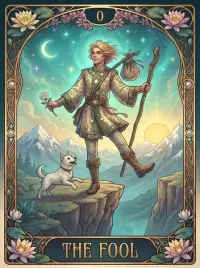
 The Fool
The Fool — the beginning card
Card zero: stepping out without the full picture. It teaches the most important beginner lesson — that a card describes a stance, not a fixed event.
Full card meaningGuide
You do not need to memorise 78 cards to start reading. Learn the four suits and what they cover, draw one card a day and write a sentence about it, and use three-card spreads for real questions. Structure first, meanings second — that order gets people reading in about two weeks.
A tarot deck has 78 cards in two groups. The 22 Major Arcana cover the large structural themes — choice, endings, upheaval, renewal. The 56 Minor Arcana cover ordinary life, split into four suits of fourteen.
Cups are feeling and relationship. Wands are energy, drive and creative momentum. Swords are thought, truth and conversation. Pentacles are money, body, work and anything material. Knowing only this already lets you read a spread roughly correctly.
Draw one card each morning and write a single sentence about how it showed up by evening. This builds personal associations, which are far more durable than memorised keywords.
After a week, add a three-card spread for a real question. Do not start with the Celtic Cross — ten positions will drown a beginner and teach nothing.
No. Reading is mostly structure: know the suit, know roughly where the card sits in its sequence, and describe what the image is doing. Intuition arrives later, and it arrives on top of that structure rather than instead of it.
Reversals are optional at the start. Many experienced readers use them; many do not. Add them once upright meanings feel steady.
Inside The Codex
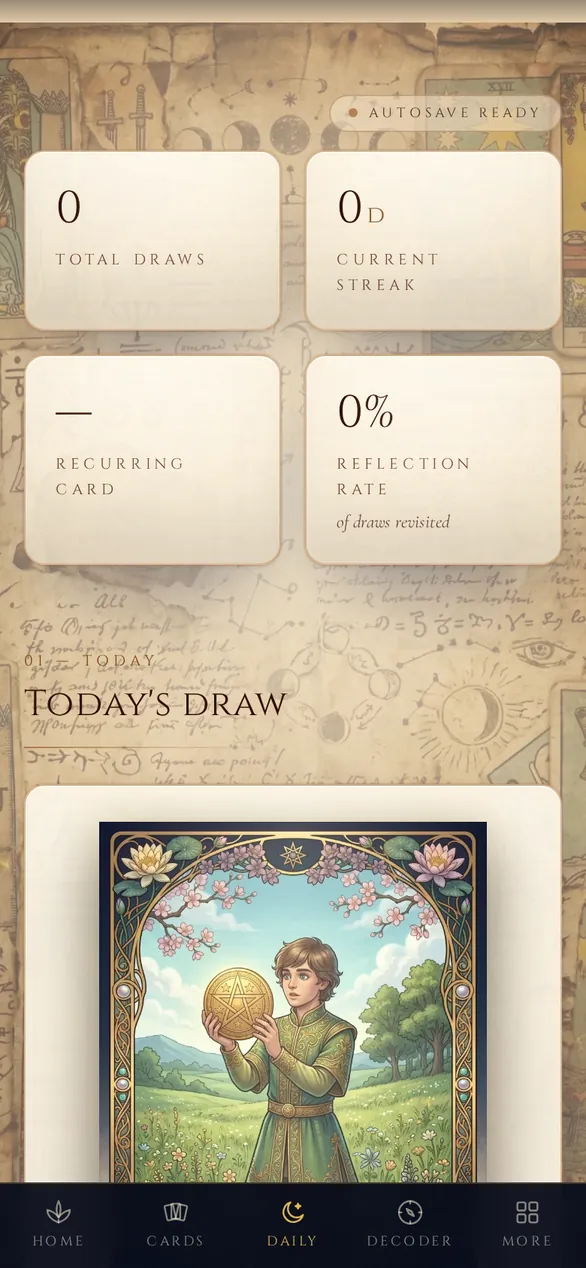
Real screens from the app — card library, decoder and daily draw.
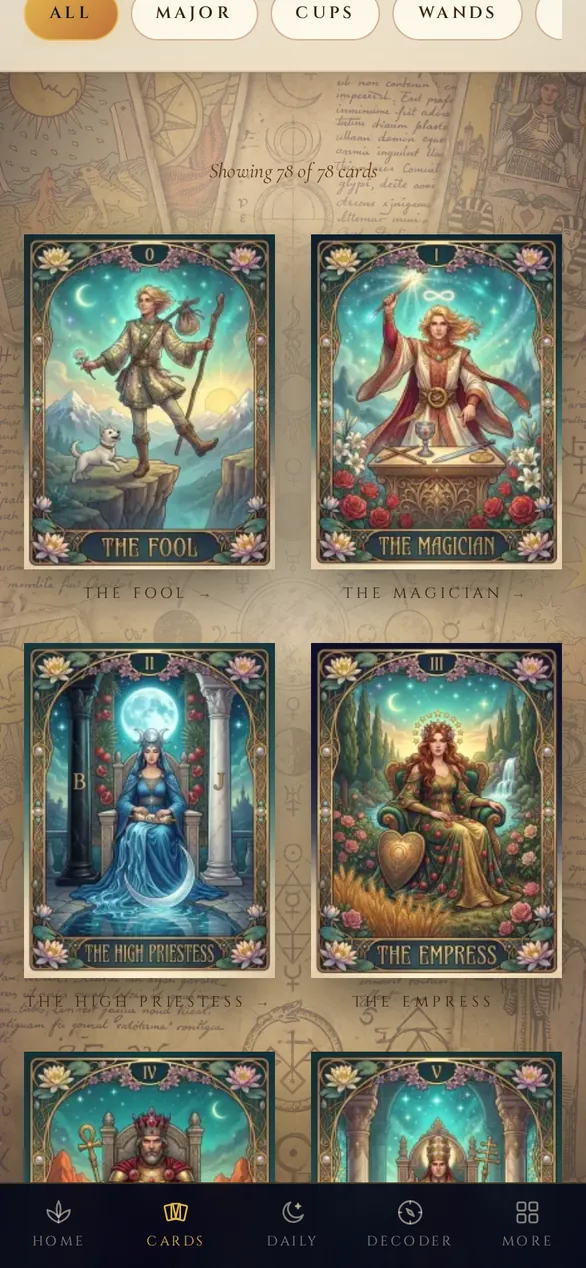
 The Fool
Card zero: stepping out without the full picture. It teaches the most important beginner lesson — that a card describes a stance, not a fixed event.
Full card meaning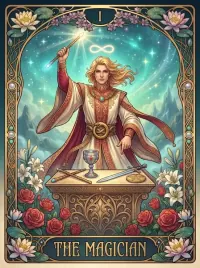 The Magician
Everything needed is already on the table. Useful early because it shows how a Major sets the theme of a whole reading.
Full card meaning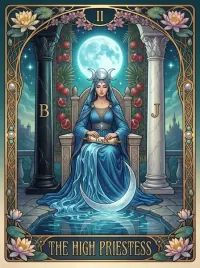 The High Priestess
The counterweight to The Magician: knowledge held quietly rather than used. A clean example of how two neighbouring Majors contrast.
Full card meaning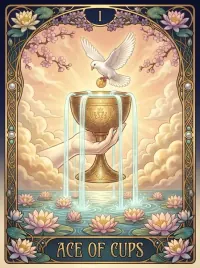 Ace of Cups
Every Ace is a beginning in its suit. Learn one Ace properly and you have learned the logic of the other three.
Full card meaning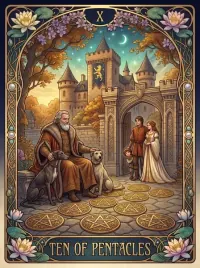 Ten of Pentacles
Every Ten is completion in its suit. Aces and Tens together give you the shape of the whole Minor Arcana in eight cards.
Full card meaningBrowse all 78 cards, or draw today's card and write your first sentence.
Explore the card library